
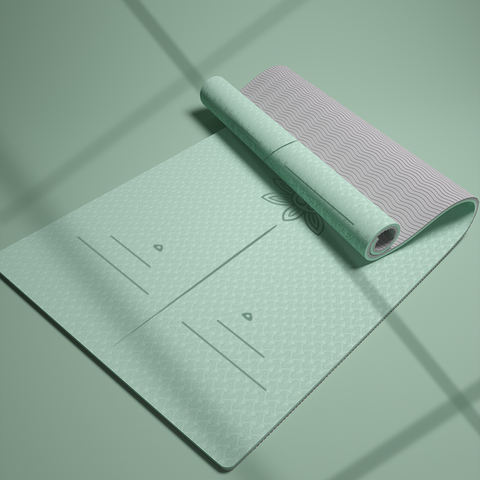
What is TPE?
TPE (thermoplastic elastomer) is a lightweight, recyclable, odorless material. Most private-label TPE mats use a double-layer construction — a dense base for support and a textured top for grip — in thicknesses of 4–8 mm. It contains no PVC and no harmful plasticizers.
What is PU / rubber?
A PU mat pairs a polyurethane top layer with a natural-rubber base. The result is exceptional grip, even when wet, which is why it dominates hot-yoga and premium studio lines. The trade-off is weight and a higher unit cost.
Cost and MOQ
TPE is more cost-efficient and friendlier to low MOQs (we start TPE at 100 pcs per design/color). PU/rubber carries a premium price and usually a higher minimum, so it suits established or premium lines.
Grip and use case
TPE gives reliable dry grip for everyday home and gym practice. PU/rubber is the choice for hot yoga, sweaty sessions and studios where slip is not an option.
If you are launching a new brand, TPE is the safer first product. Add a PU/rubber premium line once demand is proven.
Eco profile
TPE is recyclable and PVC-free. Natural rubber is renewable but not recyclable; PU is synthetic. For sustainability messaging, we can advise on recyclable TPE formulations.
Which should your brand choose?
- New brand / mass market: start with TPE — lower risk, lower cost.
- Premium studio line: PU/rubber for grip and positioning.
- Most growing brands: run both, let the market decide.
Not sure which fits your price point? Send us your target retail price and market, and we will recommend a material and spec.